

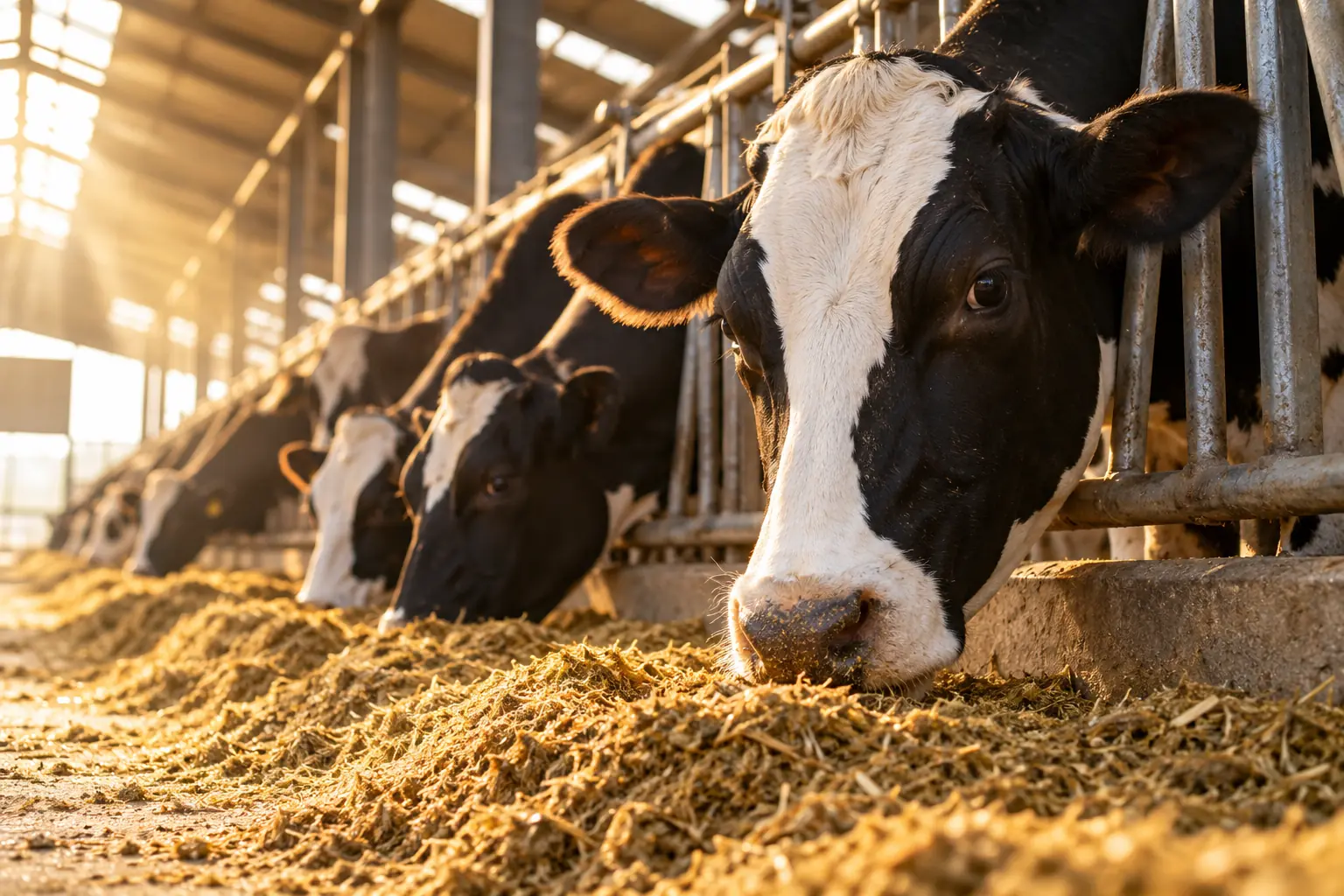
Dairy feeding is more than a formulation or a supplement choice. Forage quality, ration consistency, water access, feed-bunk management, health and stage of lactation all matter. Compare the written ration, the delivered ration and the feed cows actually consume. The differences between them often identify practical opportunities for improvement.
Separate production groups and needs
Dry cows, fresh cows and cows in mid-lactation are not interchangeable feeding groups. Nutrition planning should reflect production stage and body condition. Early-lactation performance is also connected with transition management and health. A shared record helps the nutritionist and veterinarian coordinate their work rather than address feeding and health as unrelated issues.
Understand the forage in front of you
When changing forage supply, compare more than appearance or price per kilogram. Retain analyses, dry-matter information and consignment identity. A change in moisture alters the dry matter delivered even when the loading weight looks unchanged. Representative sampling helps connect the formulation with the ingredients actually available.
Energy, protein and fibre need to be considered within the whole ration. Increasing concentrate alone is not a dependable shortcut to more milk. Rumen function, fibre characteristics and eating behaviour belong in the assessment. The objective is sustained intake of a suitable ration rather than a higher concentration of one nutrient on paper.
Make delivery consistent
For a total mixed ration, loading practice, mixer condition and distribution affect consistency. The feeding team needs to know which formulation applies to each group and when a change begins. Record the formulation version and its start date so production records can be interpreted against the correct programme.
Observe the bunk at different times, not only when fresh feed arrives. Access, refusals and signs of sorting help assess how the plan is delivered. Use a short repeatable observation record: what was seen, where, when and what action followed. This is easier to review than memory or different descriptions from different team members.
Include water in the feeding review
Dairy cattle require adequate water of suitable quality. Check cleanliness, access and delivery at the drinking points. A performance investigation should include water where relevant. Clear appearance does not replace appropriate sampling and interpretation of a water test.
Read milk quality in context
Review milk volume alongside trends in components and udder-health information. A change in one measure should not automatically be labelled a supplement deficiency. Feeding, animal health and production management interact. Milking hygiene and milk storage remain distinct responsibilities and cannot be replaced by a ration change.
Keep a practical review record
For each group retain the current formula, ingredient analyses, dry matter, production, body-condition observations and health events. Check data completeness before deciding on an adjustment. If several changes are needed, record their timing and responsibility so later results can be interpreted.
A consistent, documented adjustment is easier to evaluate than multiple unrecorded changes. The programme should fit the farm’s resources, feed supply and specialist advice. This article sets out a review framework; it does not prescribe an individual ration or diagnose animal-health problems.
Sources and further reading
- University of Minnesota Extension — Improving peak milk yields
- University of Minnesota Extension — Feeding total mixed rations
- University of Minnesota Extension — Managing and monitoring transition dairy cows
- University of Nebraska–Lincoln Extension — Water Quality and Requirements for Dairy Cattle
- Penn State Extension — Dairy Cattle Milk Production and Quality
- Penn State Extension — Interpreting Drinking Water Tests for Dairy Cows