

What passive immunity means
Passive immunity involves receiving ready-made antibodies. Maternal colostrum is a key source for a newborn calf, and its timing, quality and hygienic handling belong in the farm's written newborn-care plan.
Keep the formulation in view
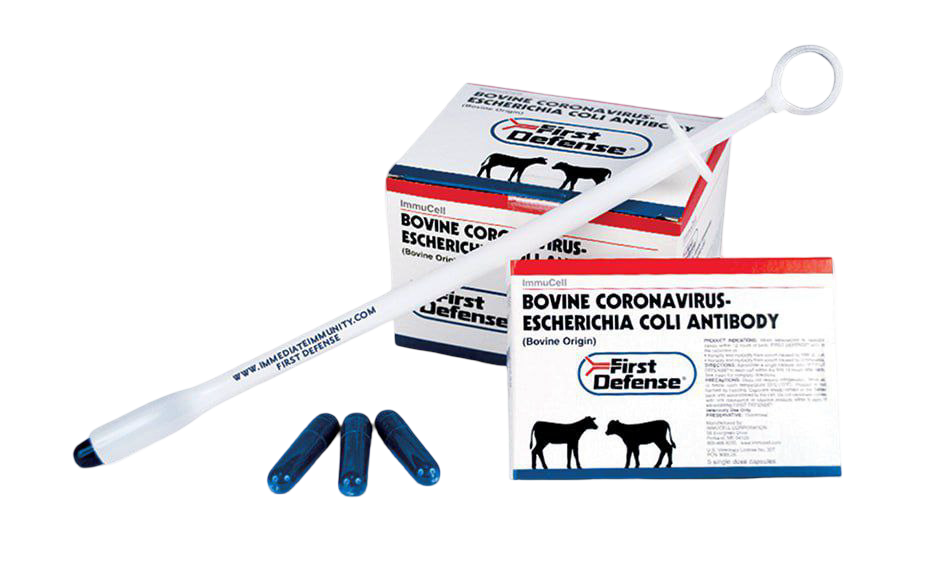
The company information and manufacturer describe the First Defense bolus as providing specific antibodies against K99+ E. coli and bovine coronavirus. Supplying antibodies is not the same mechanism as asking the calf to develop a vaccine response. First Defense is a product family: claims for a different gel or presentation should not automatically be attributed to this bolus.
Coordinate care before calving
- Assign responsibility for first care and birth-time records.
- Prepare the colostrum collection, assessment and feeding plan.
- Follow the actual product label and veterinary protocol.
- Maintain feeding-equipment hygiene and early observation records.
Do not replace basic care
Specific antibodies should not be presented as protection against every cause of diarrhea. Feeding, environment and infectious risks still require attention. A calf with diarrhea, reduced milk intake or lethargy needs veterinary assessment, not an unsupported repeat of a preventive product.
Sources and scope
- ImmuCell — First Defense bolus and scours prevention products
- Cornell University — Colostrum collection and handling
Product context follows the information supplied by the company. The sources explain the scientific and management background; they do not imply endorsement of this particular brand. This educational guide does not replace the official product label, equipment manual or advice from the professional responsible for the farm.