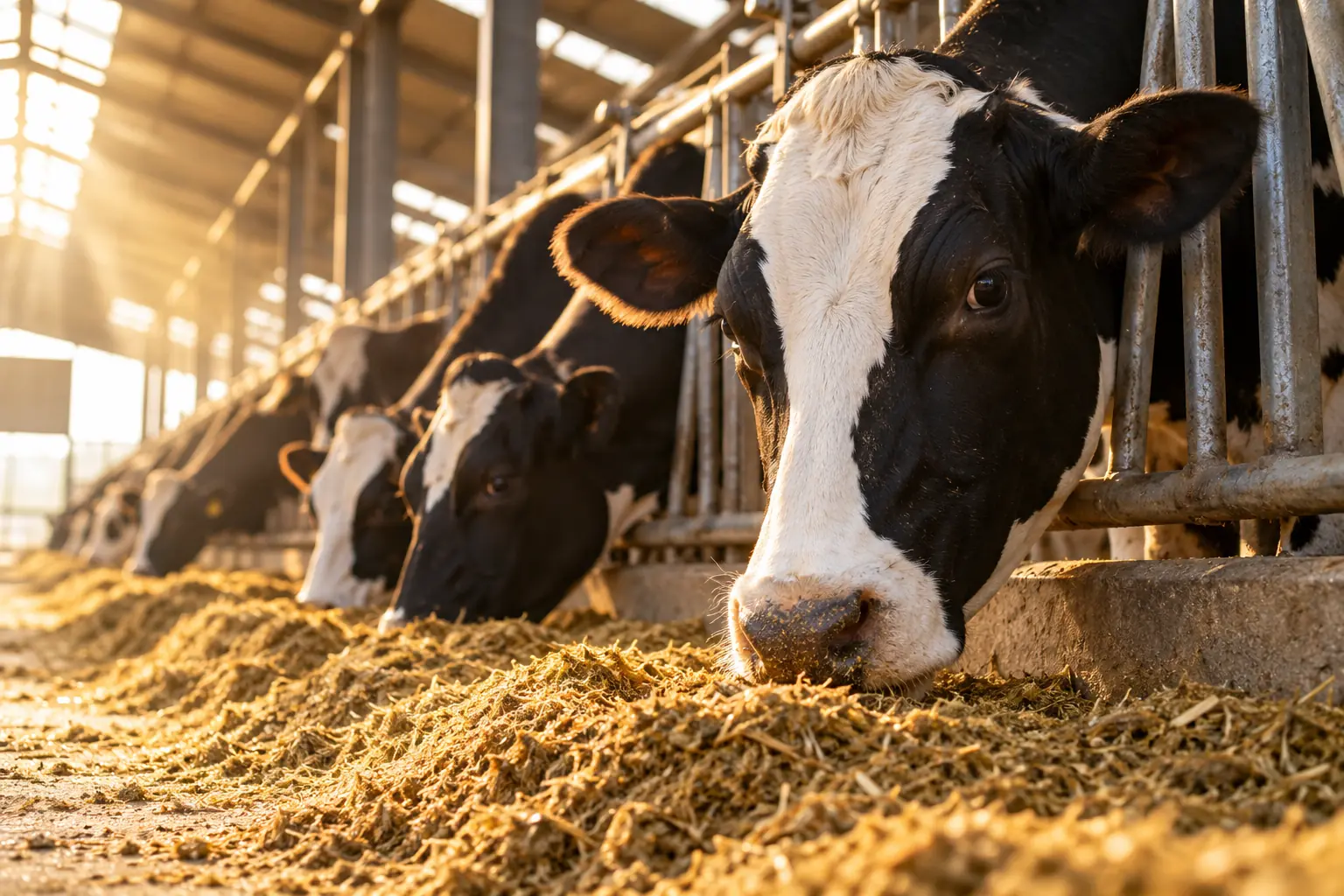

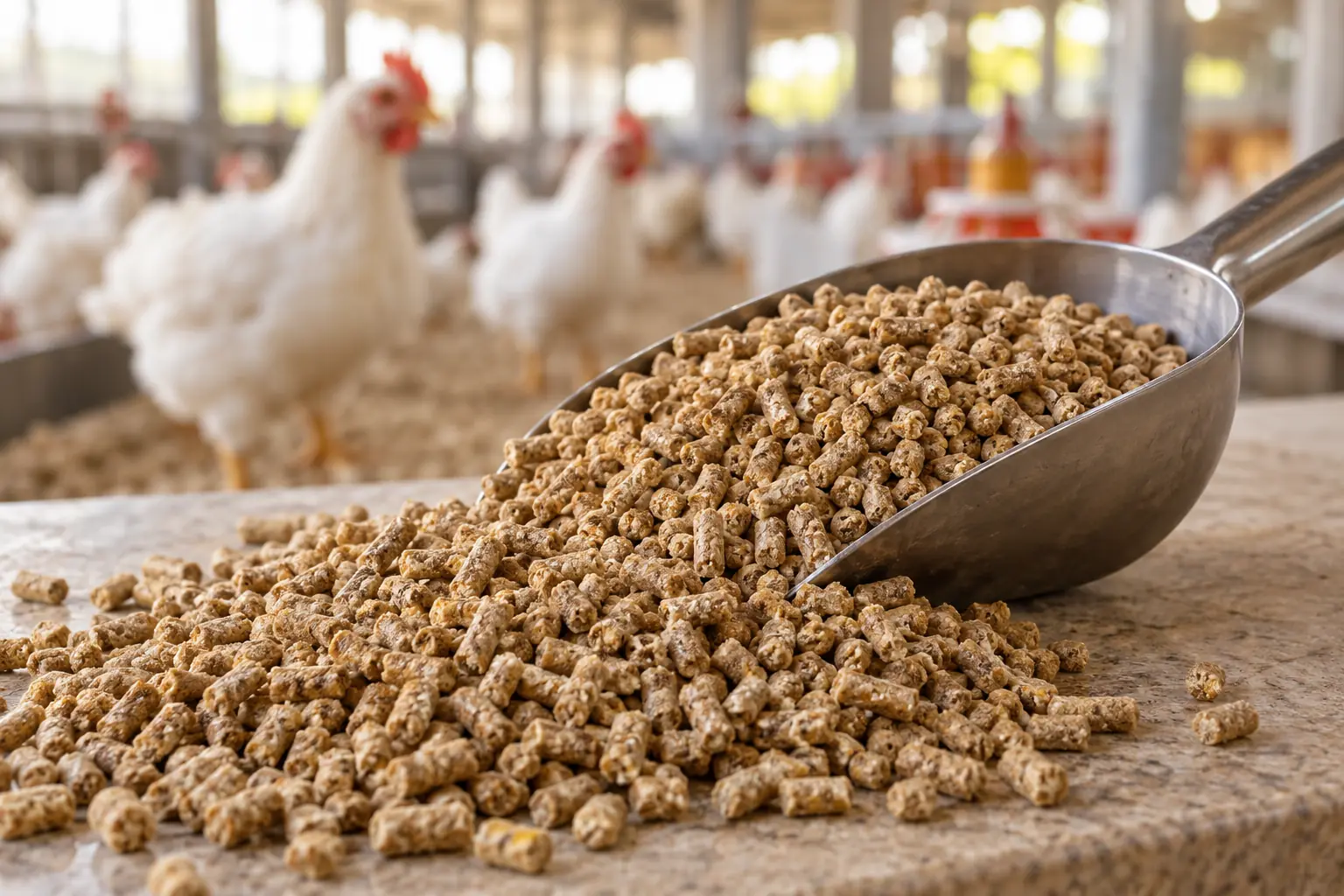
Feed efficiency reflects a connected system: ingredient selection, ration balance, animal health, water, housing and feed handling. A supplement is useful when it addresses an identified need within that system. Before evaluating a product, define the problem, the group concerned and the records that will support a decision.
Define the measure before comparing results
For growing meat animals, feed conversion commonly relates feed consumed to liveweight gain over a stated period. Comparisons need consistent definitions, weighing methods and production stages. Dairy feed efficiency uses different measures, so a dairy herd result should not be compared directly with the feed conversion ratio of a broiler flock.
Match the supplement to the ration
A basal ration already supplies nutrients. Supplement selection should start with the difference between the animal’s requirements and the nutrients available from that ration. A longer ingredient list or a familiar brand name does not establish suitability. Species, age, production stage, ingredient composition and health status belong in the assessment.
Different supplements and functional additives serve different purposes, and their production responses vary. Correcting a mineral shortfall is a different decision from evaluating a performance additive. Record the purpose, target group, manufacturer’s instructions and the outcome being assessed. Inclusion decisions require the complete ration and a qualified nutrition professional; this article is not a dosage guide.
Build a usable baseline
Create a record with the group identity, measurement dates, feed delivered, feed remaining, weights or production and unusual events. Assign responsibility for each entry and show the units. This avoids a common reporting problem: comparing a feed purchase figure with a measured feed intake figure as though they were equivalent.
Check how the plan is delivered
A sound formulation can be undermined by weighing, mixing or distribution. Review scales, ingredient loading, mixing consistency and access to feed before attributing a change to a supplement. Keep implementation records so the team can distinguish the written ration from the ration actually delivered.
Feed quality includes handling and traceability. Check packaging, batch identification, dates and storage instructions on receipt, and retain the link between delivery and use. A questionable consignment should be separated and assessed. Adding another product is not a substitute for resolving a suspected quality problem.
Review the whole outcome
Consider efficiency alongside output, health, mortality, wastage and actual feeding cost. If ingredient source, stocking arrangements or environmental conditions also changed, record those factors. A comparison between similar groups and consistently measured periods is more useful than a confident claim based on two unlike cycles.
Questions for a technical discussion
Ask how the need was identified, what ration information is available, which limitations apply and which measurements will be reviewed. Keep the answers with the batch and review records. The goal is not a promised universal percentage improvement; it is a justified choice, a controlled implementation and a result the farm can evaluate.
Sources and further reading
- FAO — Feed terminology glossary
- FAO — Small-Scale Dairy Farming Manual
- University of Maryland Extension — Understanding Supplements in Dairy Cow Diets
- University of Wisconsin Extension — Managing Feed Efficiency: What You Can Control
- University of Minnesota Extension — On-farm tools to evaluate feeding programs
- FAO — Good practices for the feed sector